Best Microphones for Home Recording
The best microphone for recording at home is the one matched to your source and your room: a Shure SM7B for vocals in an untreated bedroom, a RØDE NT1 5th Gen for vocals in a treated room, and a Shure SM57 for guitar amps and snare. For acoustic guitar, get a RØDE NT5 matched pair. For voice with no interface, get a Shure MV7+.
There's no single best mic. If you sing and play acoustic in a spare bedroom, start with the vocal section. Every pick below is current on its maker's site, with specs from that maker's own page or spec sheet.
Quick picks by source
Seven mics cover nearly everything a home studio records. Each one gets its own section or a dedicated roundup below.
| Source | Pick | Type | Key spec | Price band |
|---|---|---|---|---|
| Vocals, untreated room | Shure SM7B | Dynamic, XLR | Wants 60+ dB of preamp gain | $400 to $700 |
| Vocals, treated room | RØDE NT1 5th Gen | Condenser, XLR and USB-C | 4 dBA self-noise | $200 to $400 |
| Voice, podcast, no interface | Shure MV7+ | Dynamic, USB-C and XLR | 0 to 36 dB gain built in | $200 to $400 |
| Acoustic guitar, overheads | RØDE NT5 matched pair | Small diaphragm condenser | 143 dB SPL max | $300 to $500 a pair |
| Guitar amps, snare | Shure SM57 | Dynamic, XLR | 40 Hz to 15 kHz | $100 to $150 |
| Budget vocals, bare room | Shure SM58 | Dynamic, XLR | Built-in pop filter | $100 to $200 |
| Budget, quiet room | Audio-Technica AT2020 | Condenser, XLR | 144 dB SPL max | $100 to $200 |
Pick by source first
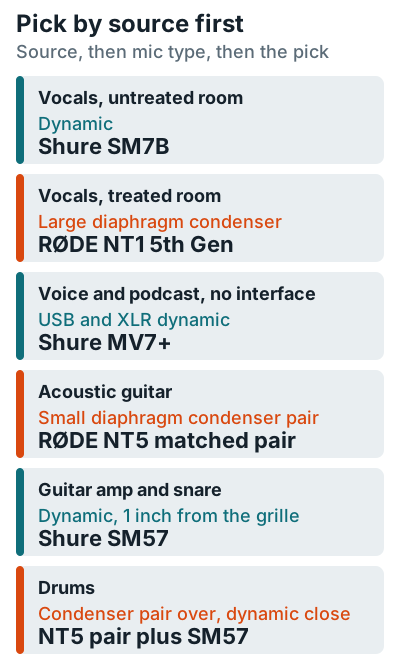
Choose by what you put in front of the mic, then by your room. Brand and price come last. A singer, a podcast voice, a strummed guitar, and a cranked amp each want a different pickup type and distance.
Dynamic or condenser: your room decides
Use a dynamic in an untreated room and a condenser in a treated one. Shure's vocal recording guide says condensers "will capture room reflections," and outside a designed acoustic space those reflections are "unlikely to improve the recording."
Put a condenser in an untreated room and it records those reflections right along with your voice.
Dynamic
1.1 to 1.8 mV/Pa
SM7B, SM57, SM58, MV7+. Low output, so they need more preamp gain, but they hear less of the room. No phantom power.
Condenser
12 to 25 mV/Pa
NT5, AT2020, NT1. Roughly 17 to 27 dB more output and more detail, including your walls. Need 48 V phantom power.
Output figures are from each maker's spec sheet. The full tradeoff is on condenser vs dynamic microphone, and what 48 V does is on what is phantom power.
USB or XLR
A USB microphone for recording music works for one source at a time. XLR mics through an interface handle several at once, and you can upgrade the mic or the interface separately. Want to sing and play guitar on separate mics in one take? That's XLR. The MV7+ and NT1 5th Gen do both, so you can start on USB and move to an interface later.
The details are on XLR vs USB microphone and are USB mics good for recording vocals. If you already own an XLR mic and no interface, see how to use an XLR mic without an audio interface. For a 3.5 mm or 1/4 inch aux mic, see how to use a regular aux mic on an audio interface.
Vocals: SM7B or NT1 5th Gen
The Shure SM7B is the vocal pick for bare rooms, and the RØDE NT1 5th Gen is the pick for treated ones. The catch with the SM7B is gain. Its user guide says to add an inline booster if your preamp has under 60 dB. The NT1's datasheet lists 4 dBA self-noise and 32-bit float USB recording.
All seven vocal picks, including loud-singer and step-up options, are compared on best microphone for recording vocals. Under $200, see best budget microphone for vocals.
Which type for vocals?
Dynamic on vocals?
Using an SM57?
Voice and podcast: Shure MV7+
The Shure MV7+ is the pick for spoken voice without an interface. It's a cardioid dynamic with USB-C and XLR outputs, 0 to 36 dB of built-in gain, 24-bit, 48 kHz recording, and a real-time denoiser, per Shure's user guide.
USB and XLR alternatives for podcasts and voice over are on best microphone for voice and podcast recording.
Acoustic guitar: RØDE NT5 pair
A matched pair of small diaphragm condensers is the most flexible acoustic guitar setup. Use one mic for mono, or both for mono-safe XY stereo. The RØDE NT5 datasheet lists a 1/2 inch cardioid capsule, 20 Hz to 20 kHz, 16 dBA self-noise, and 143 dB SPL max. RØDE sells it as a matched pair.
Single-mic options and premium pairs are on best microphone for recording acoustic guitar. For spaced mics on separate sources, see the 3:1 rule.
Guitar amps and drums: Shure SM57
The Shure SM57 is the standard close mic for guitar amps and snare, and Shure calls it "the world's most versatile instrument microphone." The SM57 user guide lists 40 Hz to 15 kHz and these starting positions:
- Guitar amp, tight: 1 inch from the speaker grille for sharp attack and extra bass.
- Guitar amp, fuller: 6 to 12 inches back for a more balanced tone.
- Snare or toms: 1 to 3 inches above the rim, aimed at the head.
For a kit, start with the NT5 pair overhead (RØDE lists drum overheads as an NT5 application) and the SM57 on snare, then add a kick mic. Kit-specific picks are on best drum mics for home recording.
How to choose a microphone for recording
Run these five checks before you buy. They'll keep you from bringing home a mic your interface can't drive.
- Name your main source. Vocals, voice, acoustic guitar, amps, or drums? Find it in the table above.
- Judge your room. Bare walls and a hard floor mean a dynamic. A treated room makes a condenser worth it. The acoustic treatment guide covers the fix.
- Check your preamp gain. A Scarlett Solo 4th Gen has 57 dB, short of the SM7B's 60 dB. A Scarlett 2i2 4th Gen has 69 dB. See do I need a preamp.
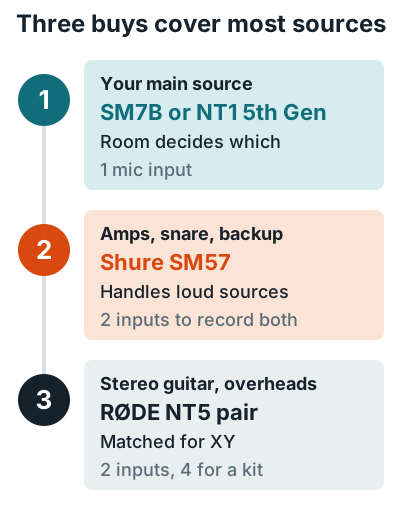
- Count inputs. You need one per mic. Guitar and vocal at once, or a stereo pair, needs two. A four-mic kit needs four. Interfaces are compared on the audio interface hub.
- Pick the connection. Go USB-only if you'll never record two sources at once. Otherwise go XLR, or get a mic with both.
For the rest of the gear and the setup, see the home recording studio guide.
FAQ
What is the best microphone for recording music at home?
For vocals, the Shure SM7B in an untreated room or the RØDE NT1 5th Gen in a treated one. For instruments, a Shure SM57 on amps and snare and a RØDE NT5 matched pair on acoustic guitar and overheads.
What is the best home studio mic if I can only buy one?
Buy for the source you record most. If that's your voice in a normal bedroom, the SM7B; if your room is treated and you also record acoustic guitar, the NT1 5th Gen covers both.
Is a USB microphone good for recording music?
Yes, for one source at a time. The Shure MV7+ and RØDE NT1 5th Gen record over USB-C and also have XLR outputs, so they keep working when you add an interface.
Do studio microphones need phantom power?
Condensers like the NT1, NT5, and AT2020 need 48 V phantom power from the interface. Passive dynamics like the SM7B, SM57, and SM58 don't.
How many microphones do I need for a home studio?
One covers vocals, voice over, and single instruments. Add an SM57 for amps and snare, then a matched pair for stereo guitar and drum overheads.