Best Pop Filters for Vocals
The best pop filter for most home vocal recording is the K&M 23956, a 5 inch (130 mm) double nylon screen on a 13 inch (330 mm) gooseneck for under $50. If you move around while you sing, get an 8 inch (200 mm) screen like the K&M 23966 or Neumann PS 20 a. If you sing right up on the mic, a louvered screen like the Stedman Proscreen or Royer PS-101 bends the air away from it instead.
Plosives are the low thumps on P and B sounds. A screen keeps those bursts of air off the mic in the first place.
Quick picks
Five filters cover every home vocal setup, from a budget clip-on to a washable metal screen.
| Pick | Type | Best for | Key spec | Price band |
|---|---|---|---|---|
| K&M 23956 | Double nylon | Most home vocals | 130 mm screen, 0.21 kg | Under $50 |
| K&M 23966 | Double nylon | Singers who move | 200 mm screen | Under $75 |
| Neumann PS 20 a | Double gauze | Large condensers | 20 cm screen, 30 cm gooseneck | $75 to $150 |
| Stedman Proscreen XL V2 | Louvered metal | Very close singing | 6.125 in screen, 16.5 in gooseneck | $75 to $100 |
| Royer PS-101 | Louvered metal | Bright vocals, easy cleaning | Washable with soap and water | $75 to $150 |
Mesh vs metal pop filters
Fabric mesh slows a burst of air by making it pass through two layers, while louvered metal bends the burst downward and away from the mic. Royer describes its metal screen as deflecting "wind downwards while letting sound go directly through," and Stedman says its louvered openings divert air bursts downward, so even close vocal work won't push pops through to the mic.
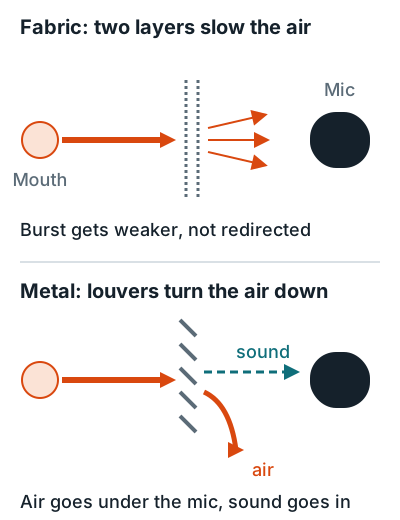
Fabric mesh
2 layers
The cheaper type, and the one that comes in big sizes. K&M makes double nylon screens at 5 and 8 inches (130 and 200 mm).
Louvered metal
Air goes down
Royer says its screen doesn't filter your sound along with the pops, and it cleans up with soap and water.
For most home singers, plain nylon does the job. Metal earns its price if you sing very close or you're tired of a crusty fabric screen.
The 5 best pop filters
Every pick is listed on its maker's site, with specs taken from the manufacturer's own product page.
K&M 23956
For a first home studio, or any singer who stays put at the mic.
- A 5 inch (130 mm) double nylon screen in a plastic frame, per K&M's 23956 page
- A 13 inch (330 mm) gooseneck
- Screws onto stand tubes up to 1.2 inches (30 mm), with a non-marring locking screw
- Weighs 7.4 oz (0.21 kg)
The catch: the 5 inch (130 mm) screen leaves little margin if you lean or turn your head mid-take.
Price band: under $50.
K&M 23966
For singers who move while they perform, or a large-diaphragm condenser (LDC) that needs full coverage.
- An 8 inch (200 mm) double nylon screen, per K&M's 23966 page
- A 13 inch (330 mm) gooseneck
- Fits stand tubes up to 1.2 inches (30 mm)
- Weighs 11.3 oz (0.32 kg)
At 11.3 oz (0.32 kg) it weighs half again as much as the 23956, which is extra load on a boom that's already carrying a heavy condenser.
Price band: under $75.
Neumann PS 20 a
For large condensers like the Neumann TLM 103 or U 87, from the company that makes them.
- An 8 inch (20 cm) frame with black gauze on both sides, per Neumann's PS 20 a page
- A gooseneck of about 12 inches (30 cm)
- A clamp with a knurled screw for mic stands
The K&M 23966 has the same 8 inch (200 mm) screen size and a longer 13 inch (330 mm) gooseneck, in a lower price band.
Price band: $75 to $150.
Stedman Proscreen XL V2
For singers who work very close to the mic and still get thumps through fabric.
- A powder-coated metal screen with large openings that redirects airflow downward, away from the capsule, per Stedman's product page
- A 6.125 in (156 mm) screen
- A 16.5 in (419 mm) gooseneck, longer than the K&M and Neumann goosenecks
- A universal clamp for stands and boom arms up to 1.5 in wide
- A lifetime warranty
The catch: Stedman's FAQ says to keep at least 2 inches between screen and mic, sing on the label side, and never bend the screen, which can break it and void the warranty.
Price band: $75 to $100. Stedman listed it at $84.99 at the time of writing.
Royer PS-101
For bright vocals and condensers where you don't want to lose any air on top.
- Louvered metal that deflects wind downward while letting sound through, per Royer's PS-101 page
- Cleans with soap and water
- You can see the mic clearly through the screen
Royer lists no screen size, gooseneck length, or other specs, so check that it fits your stand before you buy.
Price band: $75 to $150.
How to set up a pop filter
Put the pop filter about 2 inches (5 cm) in front of the mic, parallel to the diaphragm, and sing 2.4 to 3.9 inches (6 to 10 cm) from the mic. Those distances come from Rode's mic and pop filter positioning guide.
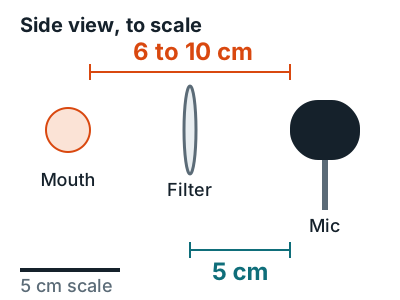
- Clamp it to the stand shaft. Both K&M screens screw onto stand tubes up to 1.2 inches (30 mm). Pair one with a stand from the best mic stands guide.
- Set the gap to 2 inches (5 cm). Rode warns that a filter placed too far from the mic is less effective at stopping plosives.
- Cover the whole diaphragm. On a side-address condenser, center the screen on the capsule, not the top of the grille.
- Keep it parallel. Rode says the screen should sit parallel to the diaphragm. With a louvered screen, face the louvers so the air goes down, away from the mic.
- Angle the mic slightly if pops remain. Rode suggests a slight angle to the sound source to cut plosives and sibilance.
Once the filter's in place, set your input level with the steps in how to record vocals at home.
Do you need a pop filter?
You need a pop filter for any condenser mic used for close vocals, but many dynamic vocal mics already have one built in. Shure says the SM58's built-in spherical filter minimizes wind and breath pops, and the SM7B ships with an extra A7WS windscreen for close-talk use.
Not sure which mic type you have? See condenser vs dynamic microphones, or the best microphones for recording vocals. A pop filter is one line on the home recording studio equipment list.
FAQ
Is a metal or mesh pop filter better?
Fabric mesh is the cheaper choice and comes in bigger sizes. Louvered metal bends the air downward and, per Royer, washes clean with soap and water.
How far should a pop filter be from the mic?
About 2 inches (5 cm), parallel to the mic's diaphragm and covering all of it, per Rode. Rode puts the singer 2.4 to 3.9 inches (6 to 10 cm) from the mic, so the filter sits between the two.
Do I need a pop filter with a dynamic mic?
Often not. The Shure SM58 has a built-in spherical pop filter, and the SM7B ships with an extra A7WS windscreen for close-talk use. Add a pop filter if you still hear thumps on P and B sounds.
Does a pop filter change the sound of the vocal?
Royer says fabric screens can filter your sound along with the pops, and it designed its metal PS-101 to let sound pass straight through. That claim is the main argument for metal.
What size pop filter should I get?
A 5 inch (130 mm) screen is enough if you stay still at the mic. Singers who move get more cover from an 8 inch (200 mm) screen like the K&M 23966 or Neumann PS 20 a.