Do I Need a Preamp to Record Vocals?
No, you don't need a separate preamp to record vocals. Your audio interface already has one on every mic input. The Scarlett 2i2 4th Gen, for example, has a 69 dB gain range and minus 127 dBu EIN on its mic preamps.
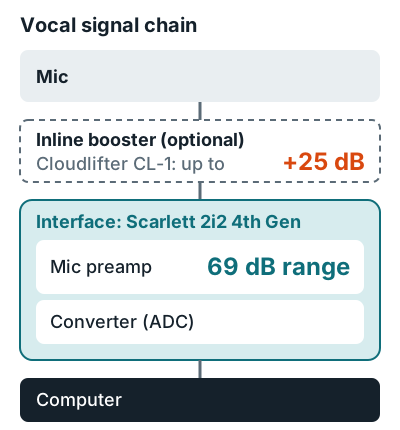
When extra gain helps: low output mics
An inline booster or stronger preamp helps only with very quiet dynamic mics. Shure's SM7B user guide rates the mic at minus 59 dBV/Pa and says to add a booster if your preamp has no more than 60 dB of gain.
Turn up the interface
60+ dB
If your preamp has more than 60 dB, the SM7B needs nothing extra.
Your mic choice matters more than a preamp. Compare options in the best microphone for recording vocals, or see interfaces with more gain on our best audio interfaces for home recording page.
Related questions
Are audio interfaces preamps?
An audio interface contains mic preamps, one per XLR input, plus converters and outputs. A standalone preamp only adds gain and needs an interface to reach the computer.
Does a Cloudlifter need phantom power?
Yes. The Cloudlifter CL-1 runs on the interface's 48V but doesn't pass it on to the mic, so it suits dynamic and ribbon mics.
Does the Shure SM7dB need an external preamp?
No. Shure says all it needs is an interface or mixer with 48V phantom power to run its built in preamp, which adds up to 28 dB.
More answers: Home recording FAQ