What Is the 3:1 Rule for Microphones?
The 3:1 rule says a second microphone should be at least three times as far from the first mic as the first mic is from its source. Shure's choir miking guide puts mic 1 3 feet from the singers and mic 2 9 feet from mic 1. At home, with your mic 1 foot from you, the next mic goes at least 3 feet away.
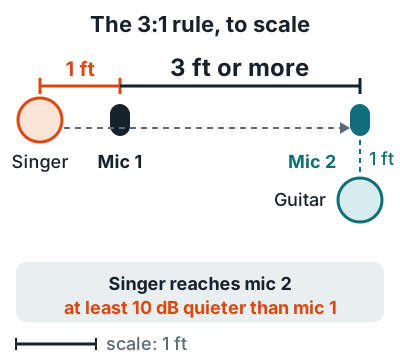
It's there to stop comb filtering, the hollow sound you get when one source reaches two mics at slightly different times and you mix them together. DPA's comb filtering guide says it only happens when the two signals are within 10 dB of each other, and the 3:1 spacing gives about 10 dB of difference.
When to break it
Think of the rule as a shortcut to that 10 dB. Anything else that creates the level gap works too. DPA notes that panning the mics apart also reduces the problem, and DPA's guide says directional mics usually stay fine at 3:1 even with neighbors on both sides.
At home, it matters most when you record guitar and vocals at the same time. With a single vocal mic, or a drum kit where you check phase by ear, apply it loosely. More placement topics are in the microphones for home recording hub.
Related questions
Why does the 3:1 rule work?
Tripling the distance drops the level by about 10 dB, and DPA says comb filtering needs the two signals to be within 10 dB of each other. Below that, the bleed is too quiet to cause audible phasing.
When can you break the 3:1 rule?
When the mics are panned apart or one is turned well down in the mix, since both create the level difference the rule is after. DPA also says directional mics are normally fine at 3:1 even with a neighbor on each side.
Does the 3:1 rule apply to recording one singer?
No. It only matters when two or more open mics pick up the same source, such as a singer with an acoustic guitar or a group around several mics.
More answers: Home recording FAQ