What Are Some Good Home Studio Setup Ideas?
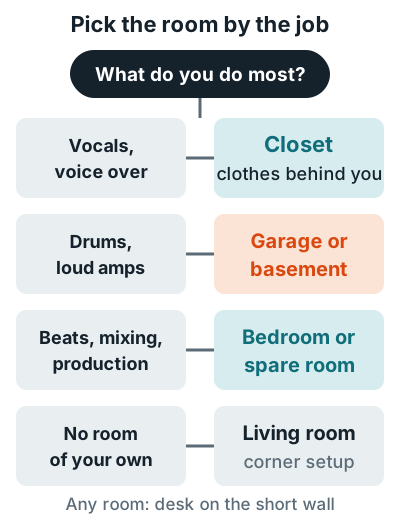
The best home studio ideas start from the room you have: a clothes closet for vocals, a bedroom or spare room for beats and mixing, a garage or basement for drums and amps, and a living room corner when no room is yours. In every room, the desk goes on the short wall. In GIK Acoustics' test room, that one move cut the spread between bass peaks and nulls from 30 dB to about 16 dB.
Closet vocal nook
A clothes closet makes a good vocal or voice over spot, and it's the cheapest booth you'll ever own. Neumann's room guide calls an open wardrobe a large absorber and puts it behind the singer, so the cardioid mic faces the clothes and rejects the room.
Do
Back to clothes
Face the mic with the open closet behind you.
Do
Laptop outside
Neumann warns computer fan noise reaches the vocal mic.
Don't
Monitors inside
Yamaha asks for 8 inches (20 cm) of air around HS monitors, not a cramped space.
The monitor spacing comes from Yamaha's HS series manual, which warns against confined, poorly ventilated spots. Want more than an open closet? See how to build a vocal booth or the vocal booth options.
Bedroom studio
A bedroom is the most common home studio, and Neumann's vocal guide says a bedroom "is often good enough" to record in. Put the desk on the short wall and the bed behind you. Layout, shared-room tradeoffs, and renter-friendly panels are in bedroom studio setup.
Garage studio
A garage suits drums and amps because it puts distance between you and the bedrooms. The catch is heat and cold. Focusrite rates the Scarlett 2i2 4th Gen for a maximum room temperature of 104°F (40°C), so check your garage on the hottest day before you move in.
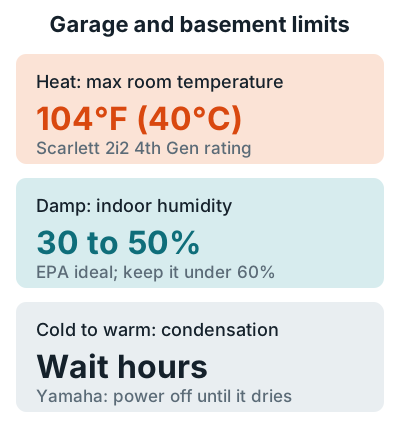
Cold is a problem too. Yamaha's manual says sudden temperature changes can cause condensation inside the device, and to leave it off for several hours until it has fully dried. So don't carry gear from a cold garage into a warm house and switch it right on.
- Insulate and condition first. Keep the room in your gear's rated range year round.
- Seal gaps around the big door. See soundproofing from outside noise.
- Plan for drums. Isolation for a kit is covered in soundproof drum room, and mic setups in how to record drums at home.
Basement studio
A basement works as a studio only if it stays dry. EPA recommends keeping indoor humidity below 60 percent, ideally 30 to 50 percent, to prevent mold.
Low ceilings put a strong reflection right above the desk. GIK notes the side walls and ceiling form zones where early reflections are strong. A ceiling panel over the desk treats it, and GIK's 242 datasheet mounts one with a cloud bracket. GIK now sells the 242 as the FlexRange panel.
Living room or shared space
When no room is yours, set up in a living room corner and keep the gear compact. Neumann's vocal guide rates a living room "often good enough," and its room guide says a couch can work as a broadband absorber when it sits in a corner.
Center the desk on a short wall if you can, rather than wedging it into a corner. GIK says bass builds up most in corners, so a corner desk puts you and the monitors right where it piles up. Closed-back headphones make late-night sessions possible without monitors keeping the house up. See the best closed-back studio headphones.
Room ideas compared
Each room has one main risk. Fix that first, then worry about the rest.
| Room | Best for | Main risk | First fix |
|---|---|---|---|
| Closet | Vocals, voice over | Fan noise, no air for gear | Laptop outside, mic faces clothes |
| Bedroom | Beats, mixing, vocals | Sharing with sleep | Closed-back headphones, desk on short wall |
| Garage | Drums, amps | Heat, cold, the big door | Climate control, seal the door |
| Basement | Quiet tracking, drums | Humidity, low ceiling | Dehumidify to under 60 percent, ceiling panel |
| Living room | Shared households | Corners, interruptions | Desk off the corner, couch in a corner |
For the exact desk, monitor, and panel positions in any of these rooms, see home studio design and layout. Gear lists at two price points are in home studio on a budget, and the full walkthrough is how to set up a home recording studio. Every topic is linked from the home recording studio guide.
FAQ
Can you record in a closet?
Yes, for vocals and voice over. Open the closet, stand with your back to the clothes, and face the mic. Neumann calls an open wardrobe of clothes a large absorber.
Is a garage good for a home studio?
It's good for loud sources if you can control temperature. Focusrite rates the Scarlett 2i2 4th Gen for a room no hotter than 104°F (40°C).
Is a basement good for a recording studio?
Yes, if it stays dry. EPA recommends indoor humidity below 60 percent, ideally 30 to 50. Run a dehumidifier if a hygrometer reads higher.
Can I record in a bathroom?
Not for clean vocals. Neumann's vocal guide says bathrooms are usually too ambient, while a bedroom or living room is often good enough.
What's the best room in a house for a home studio?
The largest rectangular room you can dedicate, with the desk on the short wall. Use a closet for vocals if that room is too live.
More answers: Home recording FAQ