Is an Audio Interface a DAC?
Yes, every audio interface is a DAC: its digital to analog converter turns playback from your computer into the analog signal that drives studio monitors and headphones. It's also an ADC, with an analog to digital converter and mic preamps on the input side. That's what lets it record, and it's what a standalone DAC lacks.
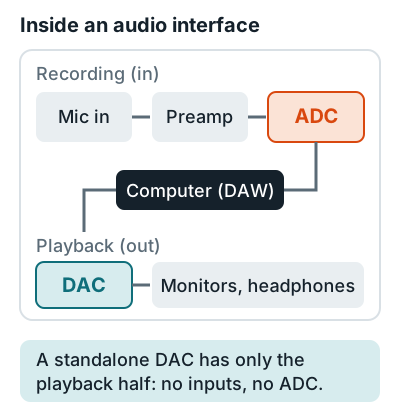
Focusrite describes both halves in its article on Clarett+ converters: audio must be converted to digital before a computer can record it, and the range has redesigned A-D and D-A converters. It quotes 118 dB dynamic range for the A-D converters and 124 dB for the outputs.
| Audio interface | Standalone DAC | |
|---|---|---|
| DAC for headphones and speakers | Yes | Yes |
| ADC for recording | Yes | No |
| Mic preamps and XLR inputs | Yes | No |
| Instrument (Hi-Z) input | Usually | No |
Even a budget interface's DAC is a capable playback device: the Scarlett 2i2 4th Gen runs at 24-bit up to 192 kHz with 120 dB dynamic range on its line outputs.
What the extra converters mean for your recordings is covered in does an audio interface improve sound quality, and the full picture is in what an audio interface is. For picks, see the best audio interfaces for home recording.
Related questions
Can I use an audio interface as a headphone DAC?
Yes. Set it as your computer's sound output and plug headphones into its headphone jack. It plays any audio, not only your DAW.
Do I need a separate DAC if I have an audio interface?
No. The interface's DAC already feeds its monitor and headphone outputs, so a second DAC adds nothing for recording or mixing.
What is the difference between a DAC and an audio interface?
A DAC only turns digital audio into analog for playback. An interface does that and also records: mic preamps and an ADC turn your mic or guitar into digital audio.
More answers: Home recording FAQ