What Do Acoustic Panels Do?
Acoustic panels absorb the sound that hits them instead of bouncing it back into the room, which cuts echo, flutter, and reverb time. GIK Acoustics says an absorber "converts the energy from the sound wave to a very small amount of heat," and in Primacoustic's lab tests a 2 inch glass fiber panel absorbs all the sound that reaches it from 500 Hz up. What they don't do is block sound traveling through walls, no matter what the product listing implies.
How acoustic panels work
An acoustic panel is a slab of porous material, usually fiberglass or mineral wool wrapped in fabric. Sound goes in, rubs around the fibers, and some of its energy turns into a tiny amount of heat. GIK's room acoustics primer says broadband absorbers are typically made from "rigid fiberglass or rockwool."
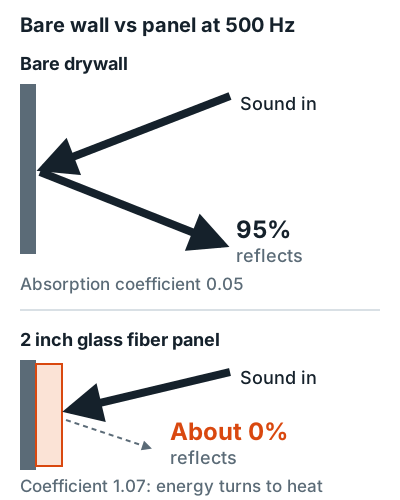
The number to look for is the absorption coefficient, from 0 (reflects everything) to 1.0 (absorbs everything). Drywall rates 0.05 at 500 Hz in Middle Tennessee State University's acoustics notes, while Primacoustic's 2 inch Broadway panel tests at 1.07 at 500 Hz in its data sheet.
What panels do to reverb time
Panels shorten a room's reverb time (RT60, the time sound takes to fade by 60 dB). You can estimate the effect before buying anything: Sabine's formula puts it at 0.049 times the room volume in cubic feet, divided by its total absorption, per MTSU's reverb time notes.
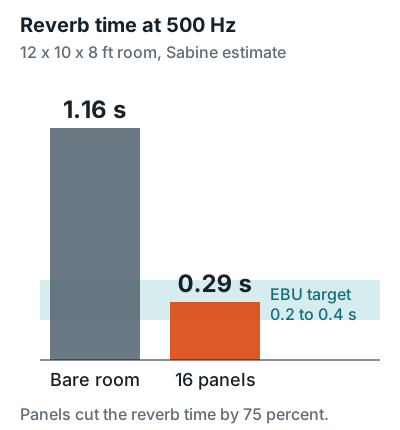
That drop, from a live box to a controlled room, lands inside the 0.2 to 0.4 second range that EBU Tech 3276 sets for reference listening rooms. Treat it as an estimate above a few hundred hertz only, though. The REW manual says RT60 "is typically not meaningful" below a few hundred Hz in domestic rooms.
Absorb, diffuse, or block
Absorbers soak up sound, diffusers scatter it, and soundproofing stops it leaving the room. Acoustic panels do only the first. Auralex's home studio guide separates products that "improve sound within a room" from those that "stop sound transmission."
Absorb
Panels
Turn sound into heat. Cut echo, flutter, and reverb time.
Diffuse
Diffusers
Scatter sound "evenly in all directions," per GIK, so a room doesn't sound dead.
What acoustic panels are used for
Acoustic wall panels stop reflections from coloring what you hear on your monitors and what your mic records. GIK's primer says early reflections arrive "within the first 30ms or so" and that the comb filtering they cause is "one of the primary causes of listening fatigue."
| Problem | What you hear | Panel fix |
|---|---|---|
| Early reflections | Blurred stereo image, comb filtering | Panels at the side wall and ceiling reflection points |
| Flutter echo | "Boingy" ring between parallel walls | A panel on one or both facing walls |
| Long reverb | Roomy vocals, smeared mixes | Spread panels to the coverage your room needs |
| Bass buildup | Boomy or missing notes | Thick bass traps in the corners |
For the order to tackle these, see the home studio acoustic treatment guide. Exact spots are in where to place acoustic panels, and counts are in how many acoustic panels do I need.
What acoustic panels don't do
Panels don't soundproof a room, and thin panels don't fix bass. Those are the two big letdowns for people who expected magic. GIK's primer says a 2 inch panel "will not absorb bass," and the 125 Hz figure for 2 inch Owens Corning 703 is 0.15 in its data sheet.
Keep noise out
No. Answered in do acoustic panels keep sound out.
Control bass
Only when thick. Use bass traps in the corners.
Insulate
Not their job. See do acoustic panels help with insulation.
Fix everything
They won't. The downsides are in the disadvantages of acoustic panels.
Types of acoustic panels
Acoustic paneling comes in three main forms: fabric-wrapped fiberglass or mineral wool panels, open-cell foam, and DIY frames around an insulation core. Foam is the weakest below 500 Hz: Auralex's 2 inch wedges absorb 0.24 at 250 Hz in their lab report, against 0.83 for 2 inch Broadway.
To compare materials, see what acoustic panels are made of and acoustic foam. Tested products are in the best acoustic panels for a home studio. Still not sure they're worth it? Read do acoustic panels work.
FAQ
Do acoustic panels absorb sound?
Yes, mostly in the mids and highs. A 2 inch glass fiber panel absorbs 0.83 of the sound at 250 Hz and all of it from 500 Hz up in Primacoustic's lab tests.
Do acoustic panels block sound from neighbors?
No. They absorb reflections inside the room. Keeping sound in or out takes soundproofing, a separate job done in the walls, doors, and windows.
What is the difference between acoustic panels and diffusers?
Panels absorb sound. Diffusers scatter it in many directions, so reflections stay but lose their focus. GIK suggests diffusion where too much absorption would make a room sound dead.
Do acoustic panels help with bass?
Thin ones don't. A 2 inch Owens Corning 703 board absorbs 0.15 at 125 Hz. Bass needs thick traps of 4 inches or more in the corners.
Where should acoustic panels go first?
Bass traps in the corners, then panels at the side wall first reflection points, then a cloud on the ceiling above your seat.
More answers: Home recording FAQ