How to Soundproof a Room Cheaply
The cheapest way to soundproof a room is to seal its air gaps. In a Hilti lab test, sealing the perimeter gaps of a chase wall raised it from STC 34 to STC 63. After that, the best value is sealing the door, then insulating any wall you already have open, then adding damped drywall.
Cheap soundproofing ranked by dB per dollar
Sealing wins because a tiny opening wipes out most of a wall's rating. Knauf's acoustics white paper says an opening of 1/100 of 1 percent of a wall's area can cut transmission loss from 50 to 39 dB.
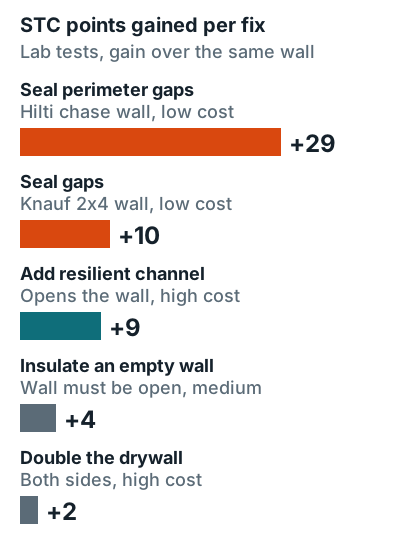
| Rank | Fix | Lab gain | Cost band | Renter safe |
|---|---|---|---|---|
| 1 | Acoustical sealant at gaps, outlets and wall edges | +10 to +29 STC | Under $100 per room | Mostly |
| 2 | Door perimeter gasket plus sweep or door bottom | Closes the door gap | Under $100 per door | Yes |
| 3 | Insulation in an empty wall you've opened | +4 STC (32 to 36) | Medium | No |
| 4 | Second drywall layer with damping compound | Up to +12 STC (maker's claim) | Medium to high | No |
| 5 | Resilient channel and new drywall | +9 STC (36 to 45) | High | No |
The sealing gains come from Hilti's chase wall (34 to 63) and from Knauf's tests at Riverbank Acoustical Laboratories. There, sealing 1/8 inch gaps at the top and bottom of a 2x4 wall raised it from STC 27 to 37, and the Knauf wall is the closer match for a normal room. The insulation and resilient channel figures come from Table 9.10.3.1.-A of the BC Building Code.
The cheapest way to soundproof a wall
The cheapest way to soundproof a wall is acoustical sealant along its edges and around every outlet box. The BC Building Code table's notes say its sound ratings hold only where there are no visible cracks or voids. They also say walls rated STC 50 or more need acoustical sealant at electrical boxes and at the wall-to-floor and wall-to-wall joints.
Extra drywall on its own is poor value on a normal stud wall, because the studs carry sound straight through. In the same table, doubling the drywall on both sides of an insulated single stud wall moves it from STC 36 to only 38. That's a lot of drywall for 2 points.
Decoupling, wall upgrades, and full step-by-step methods for walls, doors, windows, and floors are in how to soundproof a room.
The cheapest DIY soundproofing, step by step
Do these in order, and test after each one with music at your usual level, listening from the next room.
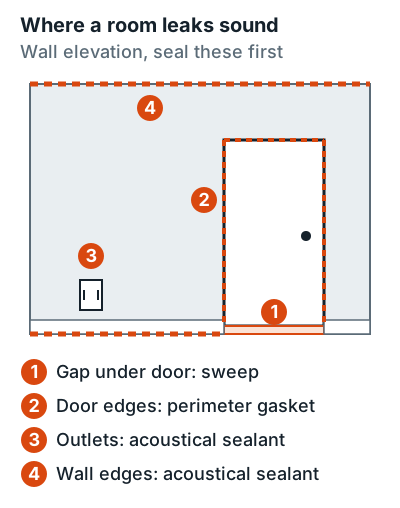
- Caulk the wall edges. Pull the baseboard, run acoustical sealant along the floor and ceiling joints, and put the trim back.
- Seal the outlets. Switch off the circuit, take off the cover plate, and seal the gap between the box and the drywall.
- Gasket the door. Fit a perimeter seal to the stop on the frame. Zero International warns that "imperfect alignment is a common cause of gaps even in newly installed gasketing," so check that it touches all the way around, per its sound control page.
- Close the door bottom. Add a sweep, or an automatic door bottom that drops a seal when the door shuts.
- Upgrade a hollow door. Masonite says the "added density" of its solid core doors helps "reduce the transfer of noise between rooms."
What not to spend money on
Skip anything that only absorbs, because absorbers don't block sound passing through a wall. Auralex's home studio guide separates products that "Absorb Sound to improve sound within a room" from those that "Block Sound to stop sound transmission."
Foam and egg crates make the room sound less echoey to you, so they feel like they're working. They don't change what gets through the wall.
Blankets on the wall
Echo only
Fine for vocal takes, not for neighbors. See do acoustic panels keep sound out.
Drywall on a normal wall
+2 STC
Costly for the gain unless you damp or decouple it.
When cheap fixes aren't enough
Cheap fixes get a normal wall back to its rated STC, about 36 for an insulated wood stud wall. Riverbank Acoustical Laboratories' STC guide puts that in the range where "loud speech is audible but less intelligible." Loud music needs a decoupled wall, and that's where cheap stops.
Drums or loud amps
Read soundproof drum room and room within a room.
Vocals only
A portable vocal booth may cost less than wall work.
Renting
Removable fixes for shared walls: soundproofing an apartment room.
Traffic and street noise
Windows first: blocking outside noise.
Full price ranges for each level are in how much it costs to soundproof a room, and the whole studio plan is in the home studio soundproofing guide.
FAQ
What is the cheapest way to soundproof a room?
Seal the air gaps with acoustical sealant and fit door seals. In Knauf's lab tests, sealing small gaps in a 2x4 wall raised it from STC 27 to 37.
What is the cheapest way to soundproof a wall?
Caulk the wall's edges and outlet boxes with acoustical sealant. Adding drywall to a normal stud wall without decoupling it gains only about 2 STC points.
Do egg crates or blankets soundproof a room?
No. They absorb some echo inside the room, but they add almost no mass and don't seal gaps, so sound still passes through the wall and door.
Does Green Glue work on a budget?
It's a mid-cost option for when you're adding drywall anyway. Green Glue claims up to 12 STC points, using about two tubes per 4 by 8 foot sheet.
Can I soundproof a rented room cheaply?
Yes, with removable fixes: door gaskets, a door sweep, and a solid door you swap in and out. Permanent wall work needs the landlord's permission.
More answers: Home recording FAQ