Soundproof Drum Room
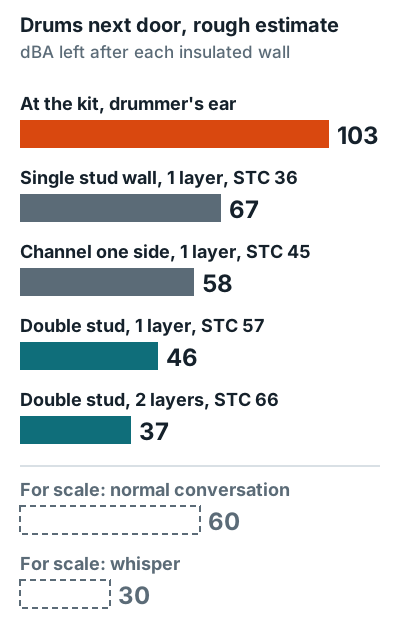
A soundproof drum room needs about 60 to 70 dB of isolation to bring drums down between whisper and conversation level next door. That's because acoustic drums averaged 103 dBA at the ear in a 2025 study of 21 drummers at the Universidad Austral de Chile. Only a room within a room gets close. Two separate rows of insulated studs rate STC 57 with one layer of 5/8 inch Type X drywall per side and STC 66 with two, against STC 36 for an insulated single stud wall with one layer per side, per Table 9.10.3.1.-A of the BC Building Code.
Why drums need more isolation than other instruments
Drums combine high average levels, sharp peaks, and deep low end. In the same study, 62 percent of drummers hit impulsive peaks above 140 dBC during a normal practice session.
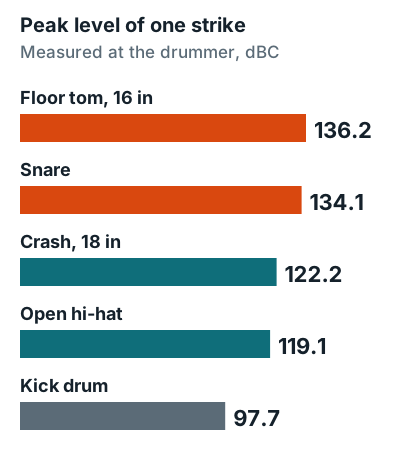
Wall ratings understate the problem for drums. ASTM E413, the STC standard, says the rating "is not appropriate" for sources like "musical instruments." STC is also calculated from 125 Hz up per USG's STC method, so a kick drum's lowest energy isn't counted at all.
Realistic dB targets for a drum room
A rough way to estimate what reaches the next room: take the drum level and subtract the wall's STC. Treat the result as a best case, because bass leaks more than the rating predicts.
| Target next door | Wall STC needed | Estimate next door | Build |
|---|---|---|---|
| Just under conversation (60 dB) | 45 | About 58 dBA | Single stud wall, resilient channel on one side, 1 layer per side, sealed door |
| Well under conversation | 57 | About 46 dBA | Double stud walls, 1 layer per side, floating floor |
| Nearer a whisper (30 dB) | 66 | About 37 dBA | Double stud, 2 layers each side, floor and ceiling isolated |
Riverbank Acoustical Laboratories' STC guide describes 60 to 65 as "loud sounds are barely audible," so even the best wall here leaves your drums faintly audible. The neighbors will still know you practice.
Stop the kick going through the floor
The kick pedal and throne pass vibration straight into the floor, which then radiates sound into the rooms below and beside you. If you live above someone, isolate the kit from the floor before you spend anything on walls.
Riser
8 panels
Auralex's HoverDeck v2 decouples the kit from the floor, and eight 23.75 inch panels fit a 4 to 5 piece kit. About $240 per two-panel set at the time of writing.
E-kit pedals
75%
Roland says its NE-10 Noise Eater cuts noise transfer through the floor by about 75 percent, in Roland's own tests.
Floating floor
1 to 4 in
Kinetics' RIMWood floor sits on isolator pads with a 1 to 4 inch airspace. Part of a full build.
Auralex publishes no dB figure for HoverDeck, so treat it as a first step, not a fix on its own. It is the one floor fix here that leaves with you when you move.
Building the drum room
A real drum room is a room within a room: a floating floor, separate inner walls with insulated cavities, an inner ceiling, and two sealed doors. The full build order, materials, and the space it eats are in room within a room soundproofing. In a rental, that's a landlord conversation before it's a shopping list.
- Float the floor so the kick and throne don't drive the structure.
- Frame separate inner walls with insulation in both cavities. Filling them is worth 12 STC points (45 empty, 57 filled).
- Use two layers of drywall per side for the STC 66 rating.
- Give the inner room its own ceiling resting on the inner walls.
- Fit two doors, one in each wall, both gasketed. Door and window methods are in how to soundproof a room.
- Seal and ventilate. Unsealed gaps took a Hilti lab wall from STC 63 to 34, and a sealed room needs baffled air ducts so you can breathe.
Budget for it with how much it costs to soundproof a room.
Cheaper ways to drum at home
If a full build isn't possible, quiet the source instead of blocking it. An electronic kit removes most of the airborne sound but still leaves pad and pedal thump.
Electronic kit
Roland says its TD-07KV is "purpose-designed to be much quieter than other e-kits," with mesh heads that "minimize pad noise."
Partial upgrades
Sealing and door seals still help, just less. Start with cheap soundproofing.
Renting
Removable options for shared walls are in soundproofing an apartment room.
The bigger picture
Every option, from seals to rebuilds, is in home studio soundproofing.
Inside the drum room: hearing and sound
Protect your hearing inside the room, because isolation keeps all that sound in there with you. NIOSH's recommended exposure limit is 85 dBA, and 90.5 percent of drummers in the 2025 study exceeded it in one practice session.
A sealed drum room also gets boomy, so treat it before you record. Start with the acoustic treatment guide and bass traps, then mic it with how to record drums at home and the best drum mics for home recording.
FAQ
How loud is a drum kit?
Drummers in a 2025 study averaged 103 dBA at the ear during practice, and 62 percent hit peaks above 140 dBC. A single floor tom strike peaked at 136.2 dBC.
Can you fully soundproof a drum room at home?
Not fully. The best wood stud wall in the BC Building Code tables (two insulated stud rows with two layers of drywall per side) rates STC 66. That leaves drums at roughly 37 dBA next door, between a whisper and conversation, and the kick's low end gets through more than the rating suggests.
Do acoustic panels soundproof a drum room?
No. Panels and foam absorb echo inside the room but don't stop sound passing through walls. You need sealing, mass, and decoupled construction for that.
Are electronic drums quiet enough for an apartment?
Quieter, not silent. Pads and the kick pedal still thump through the floor. Roland says its NE-10 board cuts that noise transfer by about 75 percent in its own tests.
Should drummers wear hearing protection in a soundproof room?
Yes. NIOSH's recommended exposure limit is 85 dBA, and 90.5 percent of drummers in the 2025 study exceeded it in a normal practice session.